
MCU Selection and Supply in AI Hardware: A Technical Guide from CONEVO for Smart Product Manufacturers
Oct 15, 2026
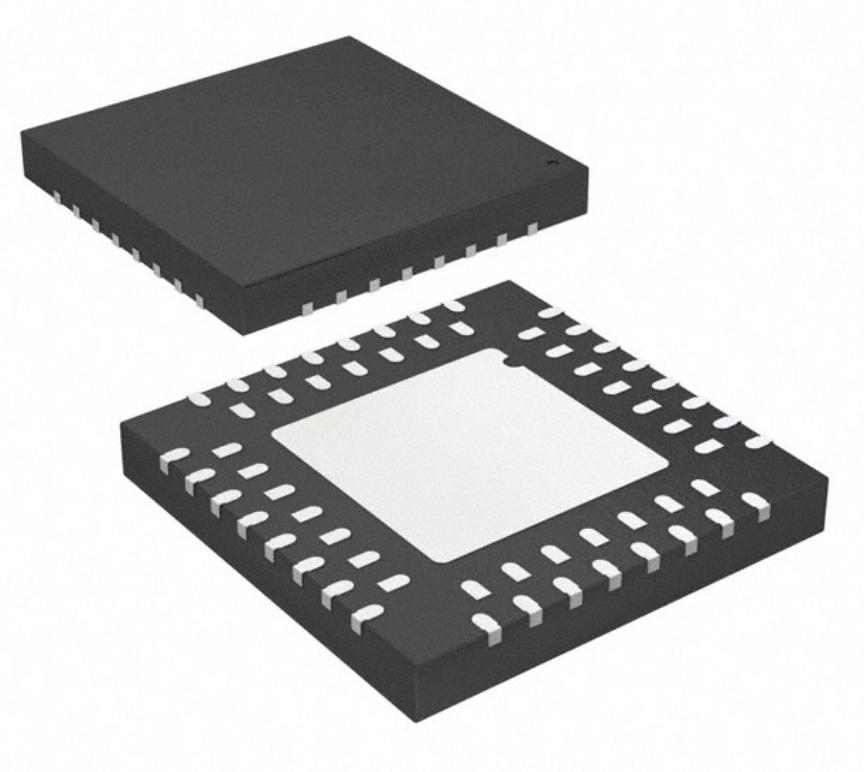
Shenzhen, Guangdong Oct 14, 2026 (Issuewire.com) - The microcontroller is usually the first component locked into a smart product design and the last one anyone wants to change. By the time firmware, certification, and tooling are in place, an MCU swap is no longer a component decision -- it is a schedule decision. Yet a large share of the problems that reach production floors are traceable to an MCU that was selected for the prototype rather than for the finished product: not enough flash for over-the-air updates, sleep current that never matches the datasheet, or a part number that goes on twelve-week allocation two weeks before a build. Conevo Electronics (https://www.conevoelec.com/about-us/) is a Hong Kong-based IC chip distributor that holds microcontrollers as physical stock, and the questions coming back from engineering and purchasing teams fall into a consistent pattern. Most of them are not about clock speed or core benchmarks. They are about memory headroom, real low-power behaviour, pin-compatible alternates, and whether the same part number will still be available for the next build. Where MCU Problems Actually Show Up In volume production, MCU failures rarely look like a dead chip. They look like firmware that no longer fits, or power figures that miss the specification sheet. Memory exhaustion during the OTA stage A device that runs comfortably in 128 KB of flash during development needs roughly double that once dual-bank firmware update, a bootloader, and a wireless stack are added. Teams that size flash to the first working build almost always end up either stripping features or migrating mid-project. Sleep current that does not match the datasheet Published stop-mode and standby figures are measured under specific conditions -- peripheral clocks gated, GPIOs configured, brown-out detection and internal regulators in defined states. In real hardware, a single floating input pin or an unconfigured peripheral clock can raise deep-sleep current by an order of magnitude. This is the single most common cause of battery life falling short of projection in wearables and remote sensor nodes. Reset and brown-out behaviour under load transients When a motor, relay, or RF transmitter switches, the supply rail dips. If the brown-out threshold sits close to the sag point, the MCU resets intermittently -- a fault that appears in the field far more often than on the bench, because bench supplies are stiffer than coin cells and long cable runs. Analog performance in a noisy board Integrated ADCs are convenient, but effective resolution depends on reference stability, sampling time, and ground layout. A 12-bit converter delivering eight usable bits is a layout and configuration issue, not a defective part. Matching MCU Parameters to Real Operating Conditions Selecting an MCU on unit price alone tends to relocate cost into firmware effort and board revisions. The parameters worth mapping against actual operating conditions are these: Flash and RAM headroom: Plan for the finished product, including OTA dual-image storage, a communication stack, and diagnostic logging. A practical target is 40-50% free flash at first release. Core class and math requirements: A Cortex-M0+ class device is sufficient for sensor aggregation and control loops. Sensor fusion, audio processing, or on-device inference generally require an M4 or M33 with FPU and DSP instructions. Low-power mode structure: Compare wake-up latency, RAM retention options, and whether an RTC and a low-power timer can run in the deepest available mode. Wake-up time matters as much as sleep current in duty-cycled designs. Peripheral mix and mapping: Count not only interfaces but also DMA channels, timer resources, and pin-mux conflicts. Two peripherals that cannot be routed simultaneously are a redesign, discovered late. Temperature grade: Outdoor gateways and body-worn devices need industrial-grade parts ('40 °C to +85 °C or wider); consumer-grade silicon in an enclosed housing with a power stage nearby is a marginal design. Security features: Secure boot, unique device ID, cryptographic acceleration, flash readout protection and TrustZone support are increasingly required by regulation and by customers, and are very difficult to retrofit. Package and pinout family continuity: Choosing a part from a series with pin-compatible memory and peripheral variants creates a migration path that needs no board change. Where a first-choice MCU carries a long lead time, CONEVO's technical staff can review a shortlist against the intended operating environment and propose alternates -- either a larger-memory sibling in the same family or a comparable device from another manufacturer that retains the critical parameters. The Board Boundary: Power, Reset, and Programming Access No MCU compensates for an unsupported power and reset network. The recurring issues are straightforward and well documented: One decoupling capacitor per supply pin, placed against the pin, with the internal regulator capacitor value taken from the datasheet rather than inherited from a previous design. Reset and boot-mode pins pulled to defined levels, never left floating, and kept away from switching nodes. A decision made deliberately between the internal RC oscillator and an external crystal -- internal oscillators typically hold ±1-2%, which is adequate for internal timing but not for asynchronous UART links or protocol timing. Debug and programming pads retained on the production board. Removing SWD or JTAG access to save space makes field firmware recovery and failure analysis impossible. Unused GPIOs configured in firmware rather than left in their default state, which is the practical fix for most unexplained sleep-current results. On request, CONEVO can review the MCU section of a BOM -- supply pins, reset network, oscillator choice, package availability -- as a sanity check before a part number is fixed. Stock Planning Across MCU Variants One product family often shares a single MCU series while each variant needs a different memory size or package. Ordering a unique part number for each variant raises holding cost and exposes the schedule to allocation swings. CONEVO weights stock toward the MCU families that appear repeatedly in real designs -- widely used 32-bit Cortex-M devices and established 8-bit controllers in common memory and package options -- held as physical inventory in Hong Kong, with quantity, manufacturer, date code, and packaging confirmable before a purchase order is placed. Specialized, high-density, and automotive-grade devices are covered through a global sourcing network across Asia, Europe, and North America. Two things matter to a team waiting on parts. The first is response speed: quotations on in-stock MCUs are typically answered within hours during Hong Kong business hours, and Hong Kong's air links allow same-day or next-day dispatch on confirmed stock orders. The second is continuity and authenticity. Reordered part numbers are tracked so follow-on builds receive the same manufacturer and marking rather than an undocumented substitute, and incoming material passes appearance, marking, and packaging inspection -- a meaningful control for MCUs, which are among the most frequently re-marked devices in the open market. Where a part genuinely cannot be sourced at a workable price, saying so early is more useful than a quotation that cannot be honoured. Building Reliable Intelligent Hardware Dependable MCU deployment rests on three connected activities: selecting for the finished product rather than the prototype, verifying the power, reset, and clock network around the device, and maintaining a stock plan with a defined migration path. Memory headroom, low-power configuration, and second-source planning are all far cheaper to resolve before mass assembly than after units ship. CONEVO combines stock distribution of microcontrollers with the technical discussion that normally has to happen alongside it. For specifications, current stock status, or a quotation, please visit https://www.conevoelec.com/
Source :Conevo Electronics
This article was originally published by IssueWire. Read the original article here.
More News










YOUR NEWS, OUR NETWORK.
Do you have Great News you want to tell the world?
Be it updates about your business or your community, you can make sure that it’s heard by submitting your story to our network reaching hundreds of news sites across 6 verticals.